
Dubai Vacancy Rates and Rental Demand: Area Data and
Dubai vacancy rates by area tier in 2026, prime vs citywide vs supply-heavy bands, Ejari demand drivers, population growth
By Invest Gulf Editorial · Updated June 11, 2026 · 16 min read
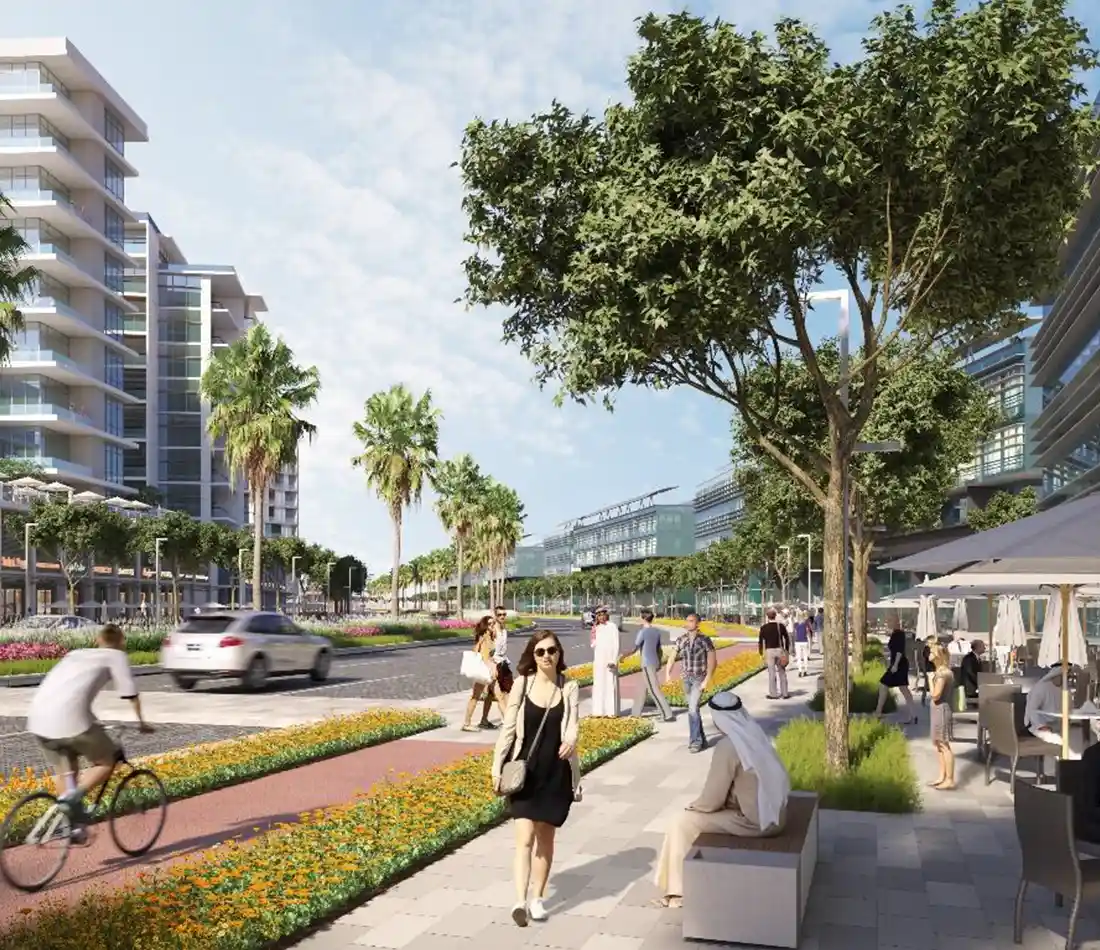
Quick answer: Dubai vacancy rates average 7–8% citywide, with prime areas (Marina, Downtown, Palm) running 4–5% and supply-heavy zones reaching 8–12%. Growing population of 4M+ residents and 5% annual growth supports rental demand, but vacancy can reduce gross yields from 8–9% to net 5–7% after factoring service charges and void periods.
Vacancy is the silent line item that turns an 8.5% gross yield brochure into a 5.2% net reality. Dubai’s rental market is genuinely strong at the macro level, population growth, corporate inflows, Golden Visa residency. It is also locally uneven, especially where 50,000-plus units approach handover in 2025–2026.
This guide gives you vacancy bands by area tier, demand drivers backed by 2026 data, and a practical method to model void periods in net yield, without relying on portal listing prices.
Macro Demand: Why Dubai Tenants Keep Coming
| Driver | 2026 signal |
|---|---|
| Population | 4M+ residents, ~5% YoY growth |
| Foreign property buyers | ~68% of transactions, many become residents or landlords |
| Golden Visa | AED 2M route supports long-term stays |
| Corporate hubs | DIFC, media, tech, healthcare employment base |
| Tourism | Supports STR overlay in prime zones, not all communities |
| UK non-dom abolition (2025) | Continued British buyer/renter inflow |
Rental demand at city level is not the problem in most 2026 base cases. Micro-supply spikes are.
Vacancy Bands for Underwriting
Use these bands for long-term (Ejari) leasing, not STR nightly gaps.
| Tier | Communities (examples) | Vacancy band | Notes |
|---|---|---|---|
| Prime | Marina, Downtown, Palm, JLT (established towers) | 4–5% | Lower void; higher service charges |
| Citywide baseline | Mixed mid-market average | 7–8% | Default model if unsure |
| Supply-heavy | New handover clusters in JVC, Dubai South, select Business Bay | 8–12% | Price to transacted rent; expect negotiation |
| Off-plan until handover | N/A | 100% | No income until keys + fit-out |
Stress test: Run base case at citywide 7%, downside at 10–12% if buying into a known handover wave.
Area Examples: Gross Yield vs Vacancy Reality
| Area | Gross yield range | Typical vacancy | Net yield (indicative) |
|---|---|---|---|
| JVC | 7.5–9.2% | 7–9% | 5.4–7.1% |
| Sports City | 7.8–9.5% | 7–8% | 5.7–7.4% |
| Business Bay | 6.0–7.8% | 6–8% | 4.5–6.0% |
| Marina | 5.5–7.2% | 4–5% | 4.0–5.5% |
| Downtown | 5.0–6.5% | 4–5% | 4.8–5.5% |
Net figures assume service charges per RERA indices; see Dubai Rental Yield Guide and Service Charges by Area.
Supply Pipeline vs Tenant Absorption
Scheduled handovers 2025–2026: roughly 50,000–70,000 units citywide; realistic delivery after delays ~35,000–55,000.
Concentration risk communities:
- Dubai South / DWC
- JVC periphery and new tower clusters
- Dubai Creek Harbour (scaling handovers)
- Dubailand affordable segment
When 500 units handover in the same quarter within 2 km, landlords compete, rental growth pauses, vacancy extends, even if Dubai-wide population grows.
Demand Segments: Who Rents What
| Tenant segment | Typical targets | Stability |
|---|---|---|
| Young professionals | JVC, JLT, Marina studios/1BR | High turnover, deep pool |
| Families | Dubai Hills, Arabian Ranches, Town Square | Lower turnover, school-driven |
| Corporate assignees | Marina, Downtown, Business Bay | Premium budgets, shorter rotations |
| Golden Visa residents | Wide, increasingly mid-market | Longer stays if employed locally |
| Students / shared | Discovery Gardens, International City | Price-sensitive |
Match unit type and finish to tenant segment before assuming generic “Dubai demand.”
Data Sources: Listing vs Transacted
| Source | Use |
|---|---|
| Ejari / RERA rental index | Underwriting anchor |
| Portal listings (Bayut, PF) | Sentiment only, typically 5–10% above closed deals |
| Broker CMA with closed leases | Best offline validation |
| Dubai REST service charges | Net yield adjustment |
| DTCM / DET | STR demand overlay, separate model |
Vacancy Modelling Template
Annual rent (transacted): AED 100,000
| Line | Calculation | AED |
|---|---|---|
| Gross rent | , | 100,000 |
| Vacancy (7%) | 100,000 × 7% | -7,000 |
| Effective gross | 93,000 | |
| Service charge | e.g. 900 sqft × AED 16 | -14,400 |
| Management (8%) | 93,000 × 8% | -7,440 |
| Maintenance reserve | 1% gross | -1,000 |
| Net operating income | ~70,160 |
On AED 1.1M purchase price → ~6.4% net yield. Gross was 9.1%. Vacancy and charges mattered more than the 0.5% gross spread between buildings.
STR Vacancy (Different Animal)
Short-term models use occupancy %, not annual void months. Rule of thumb:
- 75%+ occupancy, STR viable in tourist zones
- 60–70%, marginal vs LTR
- Under 60%, LTR usually wins net
See Short-Term vs Long-Term Rental Dubai.
Corporate and Government Tenant Anchors
Dubai vacancy is not only a function of tower supply, employer geography matters:
| Employment hub | Rental impact |
|---|---|
| DIFC / Downtown | Professional tenant pool; lower void in walkable towers |
| Dubai Media City / Internet City | JLT, Marina, Greens demand |
| Healthcare City | Business Bay, Healthcare City fringe |
| Logistics / DWC | Dubai South, growing but supply-heavy |
Abu Dhabi’s government and ADGM employment base creates stickier long-term tenancy with lower turnover than tourist-adjacent Dubai districts, relevant if you compare emirates. See Abu Dhabi Property Investment Guide.
New Handover Checklist for Landlords
When taking keys in a supply-heavy year, expect longer lease-up:
- Price at Ejari transacted median: not neighbour’s hopeful listing
- Offer flexible cheque structure (2–4 cheques) if standard in building
- Professional photography and furnished option if competing with 20 identical units
- Budget 2–3 months rent-free equivalent in year-one vacancy reserve
- Monitor competing handovers on Property Finder map radius 2 km quarterly
Worked Example: JVC One-Bed vs Marina One-Bed
| Input | JVC | Marina |
|---|---|---|
| Purchase | AED 850,000 | AED 1,400,000 |
| Transacted rent | AED 72,000 | AED 95,000 |
| Gross yield | 8.5% | 6.8% |
| Vacancy assumed | 8% | 5% |
| Service charge | AED 14,400 | AED 22,000 |
| Net yield (approx.) | ~6.0% | ~4.5% |
JVC wins on net despite similar citywide narrative, because vacancy and service charges differ. Marina wins on capital stability and STR optionality. Neither is universally “better”; vacancy assumptions flip the ranking.
Deep Dive: Seasonal and Economic Vacancy Patterns
Quarterly Rental Cycles
Dubai’s rental market follows predictable seasonal patterns that affect vacancy timing and duration:
Q1 (January-March): Peak season
- Tourism and business travel at annual highs
- New year relocations from Europe and North America peak
- Lowest annual vacancy rates in prime areas
- Rental rate premium of 5-8% over Q3 baseline
- Short-term rental occupancy rates peak at 80-85% in Marina/JLT
Q2 (April-June): Transition period
- School year ending drives family moves
- Corporate assignments typically start July 1st
- Landlords often offer early renewals to avoid summer void
- Moderate vacancy, rental growth pauses
Q3 (July-September): Slower period
- Summer departure of seasonal residents
- Regional travel reduces demand
- Highest annual vacancy rates, particularly in business districts
- Landlords offer incentives (1 month free, flexible payments)
- Prime market softens 3-5% from Q1 peaks
Q4 (October-December): Recovery
- Return of winter residents and business activity
- New corporate assignments and student intake
- Rental momentum building toward Q1 peak
- Year-end Golden Visa processing drives residency-focused leasing
Economic Cycle Sensitivity
Recession-resistant tenant segments:
- Government and semi-government employees
- Essential services (healthcare, education, utilities)
- Established family residents with children in UAE schools
- Golden Visa holders with local business investments
Recession-sensitive segments:
- Tourism and hospitality workers
- Construction and real estate professionals
- Financial services contractors
- Short-term corporate assignees
Historical Vacancy Peaks and Recoveries
2008-2012 Financial Crisis:
- Citywide vacancy peaked at 15-20% in 2009-2010
- Premium areas maintained better occupancy (8-12% vacancy)
- Recovery took 3-4 years to return to current baseline
- Price correction of 40-50% preceded rental market recovery
2014-2016 Oil Price Recession:
- Moderate increase to 10-12% citywide vacancy
- Rental rate stagnation rather than sharp price correction
- Recovery driven by expat population growth resumption
- Diversification into tourism and technology sectors accelerated recovery
2020-2021 Pandemic Impact:
- Brief spike to 12-15% vacancy during lockdown periods
- Rapid recovery as Dubai maintained open business environment
- Flight-to-quality from other GCC cities accelerated premium demand
- Short-term rental converted to long-term during travel restrictions
Area-Specific Vacancy Analysis
Dubai Marina: Established Premium Performance
Vacancy baseline: 4-5% annually Peak season occupancy: 98-99% (Q1) Low season floor: 92-95% (Q3)
Marina benefits from mature infrastructure, established tenant networks, and diversified demand sources. Key performance drivers:
- Metro connectivity reduces car-dependent tenant screening
- Tourism overlay provides short-term rental income during vacancy periods
- Professional tenant pool from nearby financial and media districts
- Lifestyle amenities (beach access, dining, entertainment) command premium
Investor considerations:
- Higher service charges (AED 18-25 per sqft) offset by lower vacancy
- Parking premium units show significantly lower void periods
- Furnished rentals achieve 15-20% premium and faster placement
- Studio apartments face more competition than 1-2 bedroom family formats
Downtown Dubai: Corporate and Tourism Hub
Vacancy baseline: 4-5% annually Peak performance: Premium branded towers under 3% vacancy Stress factors: High service charges, limited parking availability
Downtown maintains consistently low vacancy through diversified tenant demand:
Corporate long-term tenants: Regional headquarters staff, government relations professionals, financial consultants prefer proximity to Emirates Towers and DIFC.
Tourism-related short-term demand: Legal short-term rental permissions in select towers provide vacancy buffer during traditional lease gaps.
Lifestyle residents: High-net-worth individuals choosing Downtown for cultural amenities, dining scene, and social signaling.
Business Bay: Mixed Performance by Tower Quality
Vacancy range: 5-8% depending on specific tower and age New handover impact: 10-12% vacancy in towers with clustered new supply Recovery timeline: 12-18 months for new towers to achieve area baseline
Business Bay represents Dubai’s most diverse rental market, with performance heavily dependent on individual building characteristics:
High-performing towers:
- Direct metro connectivity (Business Bay station radius)
- Established property management with proven Ejari leasing history
- Mixed-use buildings with retail and dining amenities
- Parking availability and visitor access systems
Underperforming inventory:
- New handover towers competing with multiple similar options
- Poor building management leading to maintenance and utility issues
- Limited amenities relative to service charge burden
- Traffic congestion areas during peak business hours
JVC (Jumeirah Village Circle): Volume Rental Market
Vacancy baseline: 7-9% annually Supply sensitivity: Can reach 12-15% during major handover periods Tenant profile: Price-sensitive professionals, young families, shared accommodation
JVC represents Dubai’s largest single community for mid-market rental housing. Vacancy performance correlates directly with handover schedules:
Supply phases affecting vacancy:
- 2019-2021: Major developer completions led to 18-month absorption period
- 2022-2024: Market stabilization as supply paused
- 2025-2026: New wave of completions testing absorption capacity
Tenant demand drivers:
- Affordability: 20-30% below Marina/Downtown for comparable unit sizes
- Family amenities: Parks, schools proximity, community atmosphere
- Parking availability: Most units include dedicated parking spaces
- Pet-friendly policies: Many buildings accommodate family pets
Dubai South: Emerging Market with Infrastructure Dependencies
Current vacancy: 8-12% baseline, can reach 15-20% in oversupplied towers Growth trajectory: Dependent on DWC airport expansion and employment generation Investment horizon: 5-7 years minimum for market maturation
Dubai South represents the highest-risk, highest-reward vacancy scenario in Dubai:
Demand catalysts:
- Dubai World Central airport expansion to 200+ million passengers annually
- Emirates Airlines crew housing and training facilities
- Logistics and e-commerce distribution centers
- Government and semi-government office relocations
Vacancy risks:
- Limited current employment base relative to residential supply
- Transportation connectivity still developing (Dubai Metro extension planned)
- Tenant profile skews toward price-sensitive segments with higher turnover
- Competition from established communities with better amenities
Property Management Impact on Vacancy Rates
Professional vs Self-Management Performance
Professional property management companies:
- Average vacancy reduction of 1-2% vs self-managed properties
- Faster tenant placement (average 3-4 weeks vs 6-8 weeks)
- Higher retention rates through proactive maintenance and tenant relations
- Cost: 5-10% of rental income plus leasing commissions
Self-management challenges:
- Tenant screening and background verification processes
- Legal compliance with Ejari registration and RERA requirements
- Maintenance response times affecting tenant satisfaction and renewals
- Marketing reach limited compared to professional networks
Building-Level Factors Affecting Vacancy
Amenities and facilities:
- Swimming pools, fitness centers, and common areas reduce vacancy by 1-2%
- Retail and dining within building or complex improves tenant retention
- Children’s play areas essential for family tenant segments
- Business centers and meeting rooms attract corporate-sponsored tenants
Management quality indicators:
- Response time to maintenance requests (24-48 hours ideal)
- Common area cleanliness and security presence
- Utility reliability (DEWA, internet, air conditioning systems)
- Parking management and visitor access protocols
Building reputation factors:
- Online reviews and community social media groups
- Word-of-mouth referrals among expatriate professional networks
- Previous tenant experiences with lease renewal and dispute resolution
- Developer brand reputation for post-handover service quality
Advanced Vacancy Modeling for Investors
Monte Carlo Analysis for Vacancy Risk
Rather than single-point vacancy assumptions, experienced landlords model vacancy as a probability distribution:
Low-risk scenario (20% probability):
- Vacancy: 3-4% annually
- Market conditions: Strong economic growth, limited new supply
- Outcome: Net yields exceed projections by 0.5-1.0%
Base case scenario (60% probability):
- Vacancy: 6-8% annually
- Market conditions: Steady growth, moderate new supply absorption
- Outcome: Net yields meet projections within 0.2% variance
High-risk scenario (20% probability):
- Vacancy: 10-15% annually
- Market conditions: Economic slowdown, oversupply conditions
- Outcome: Net yields fall short of projections by 1.0-2.0%
Portfolio-Level Vacancy Management
Diversification strategies:
- Geographic spread across different communities reduces concentrated risk
- Mix of prime and mid-market properties balances yield vs vacancy risk
- Combination of studio, 1BR, 2BR units targets different tenant segments
- Staggered lease expiration dates prevent simultaneous vacancy exposure
Operational optimization:
- Bulk property management arrangements reduce per-unit costs
- Standardized furnishing packages across portfolio units
- Coordinated marketing and tenant referral systems
- Shared maintenance and utility contracts for cost efficiency
Regulatory Environment Affecting Rental Demand
Ejari and RERA Compliance Impact
Ejari registration requirements:
- Mandatory for all rental agreements over AED 1,000 annually
- Fee: AED 195 for contracts up to AED 100,000; AED 395 for higher amounts
- Processing time: 24-48 hours with complete documentation
- Impact on vacancy: Compliant landlords access broader tenant pool
RERA rental dispute resolution:
- Standardized rental increase limitations (based on RERA rental index)
- Tenant protection against arbitrary rent increases or lease terminations
- Landlord rights regarding property recovery and non-payment remedies
- Impact: Stable regulatory environment supports long-term tenant confidence
Golden Visa Impact on Rental Patterns
10-year residency visa effects:
- Longer-term lease commitments (2-3 years vs traditional 1 year)
- Family-oriented housing demand in school district communities
- Reduced tenant turnover in mid-premium segments
- Willingness to pay premiums for stability and quality
Property purchase threshold (AED 2M minimum):
- Supports rental demand from investors who own multiple units
- Creates natural landlord base with local knowledge and networks
- Reduces speculative flipping, increasing rental stock stability
2026 Investor Takeaways
- Default 7–8% vacancy unless prime with Ejari proof at 4–5%
- Add 2–4% vacancy premium when buying pre-handover near known supply clusters
- Use transacted rents: listing prices overstate income
- Revisit vacancy annually after major handovers in your community
- Net yield is the only yield that pays your mortgage
- Seasonal patterns matter: budget for Q3 summer vacancy increases
- Property management quality directly correlates with occupancy rates
- Building-level amenities can reduce vacancy by 1-2% annually
- Portfolio diversification across communities reduces concentration risk
- Regulatory compliance (Ejari) essential for accessing full tenant market
Vacancy bands are indicative based on market reporting and RERA data through Q1 2026. Building-level performance varies. Not investment advice.
Related reading: Gross vs Net Rental Yield in Dubai.
Frequently Asked Questions
Citywide long-term vacancy baseline for underwriting is approximately 7–8%. Prime communities (Marina, Downtown, Palm, JLT) often run 4–5% due to established tenant pools. Supply-heavy areas with clustered new handovers can see 8–12% until inventory absorbs. Always stress-test above baseline in models.
Base models on Ejari-registered transacted rents and RERA rental index data, not portal listing prices, which typically sit 5–10% above achieved deals. Dubai REST and broker CMA reports using closed leases are more reliable than advertised asks.
Yes at the macro level: population exceeds 4 million with roughly 5% annual growth, corporate relocations continue, and Golden Visa inflows support long-term tenancy. Micro-level demand varies, new handover clusters can soften rents in specific towers even while citywide demand grows.
Downtown, Dubai Marina, Palm Jumeirah, and established Business Bay towers with proven Ejari history typically show the lowest void periods. Mid-market yield districts (JVC, Sports City) have higher turnover but strong demand if priced to transacted market, not peak listing fantasy.
Deduct one month rent (8.3%) for 7% annual vacancy, or pro-rate your band. Then subtract service charges, management (5–10% LTR), and maintenance reserves. Marketing gross yields of 8–9% often become net 5–7% after vacancy and charges, sometimes lower in premium buildings with high service fees.
Get a Gulf property shortlist
Tell us your budget and market (Dubai, Abu Dhabi, RAK). We reply within one business day with options matched to your goals.