
JVC Property Investment: Yields, Prices, and Who It Suits
JVC delivers 7.5–9.2% gross yield on studios and one-beds — Dubai's highest mid-market return. Entry price, net yield math, service charges
By Invest Gulf Editorial · Updated June 7, 2026 · 9 min read
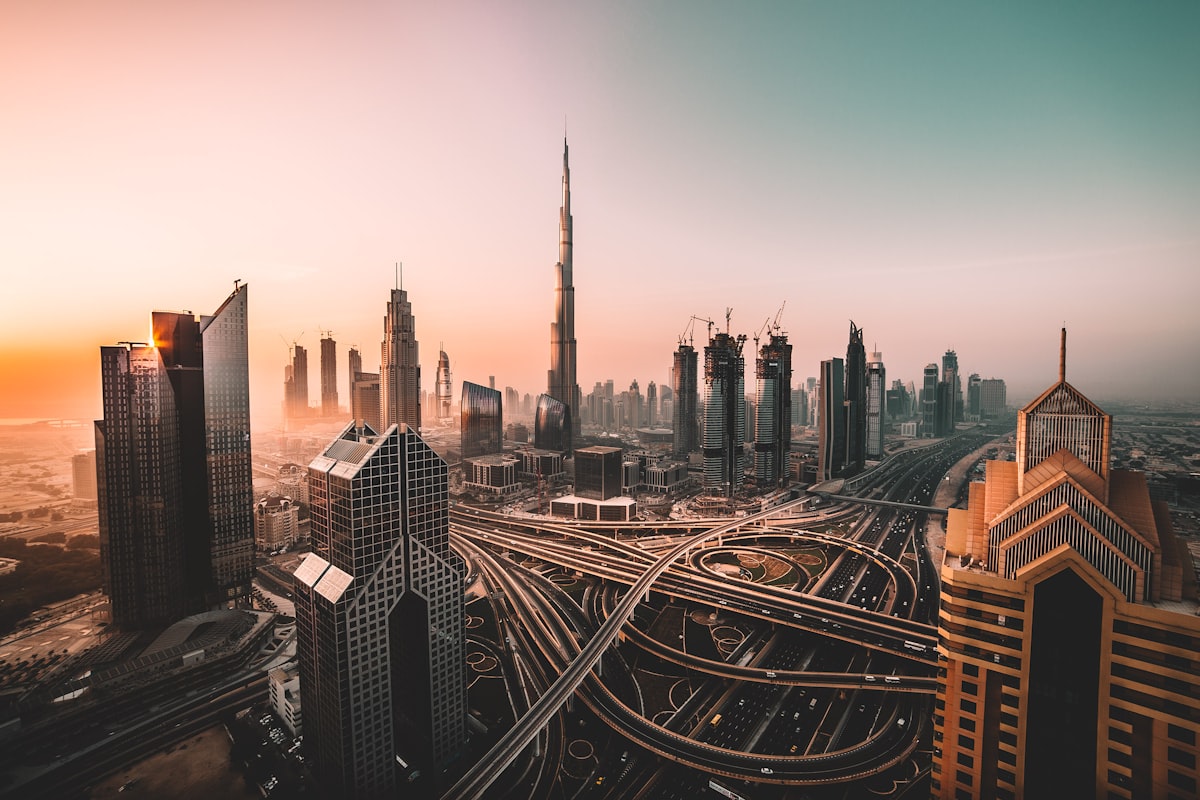
Jumeirah Village Circle is the yield engine of Dubai’s mid-market property landscape. No other established community in Dubai consistently delivers gross rental returns of 7.5–9.2% on studio and one-bedroom apartments — and unlike Discovery Gardens or International City, JVC sits within a 20-minute drive of Dubai Marina, JBR, and the main SZR business corridor.
That combination — genuine access, mid-market entry price, and category-leading yield — makes JVC the starting point for most yield-first investor conversations about Dubai.
Quick answer: Gross yield of 7.5–9.2% on studios and 1BR, net yield of 5.4–7.1% after the full cost stack. Entry price from AED 430K for a studio. Best suited to buy-to-let investors who want consistent long-term rental income rather than capital appreciation or short-term rental upside.
Part of the Best Areas to Buy Property in Dubai guide and the Dubai Rental Yield Guide.
JVC in numbers: 2026 snapshot
| Metric | JVC figure | Dubai average |
|---|---|---|
| Studio gross yield | 7.5–9.2% | 5.5–7.5% |
| 1BR gross yield | 7.0–8.5% | 5.0–7.0% |
| Estimated net yield (1BR) | 5.4–7.1% | 3.8–5.8% |
| Studio entry price | AED 430K–680K | AED 550K–900K |
| 1BR entry price | AED 680K–950K | AED 900K–1.5M |
| Average service charge | AED 10–14 per sq ft | AED 12–22 per sq ft |
| Tenant profile | Mid-income expats, young professionals | Mixed |
| Average tenancy length | 12–24 months | 12–18 months |
| DLD freehold zone | Yes | — |
Why JVC yields so well
JVC’s yield performance comes from a straightforward supply-and-demand story, not a market anomaly.
The tenant base is large, predictable, and price-sensitive. JVC houses a significant portion of Dubai’s healthcare, hospitality, retail, and trades workforce — people on mid-range salaries who need a well-connected apartment at a price below AED 70,000 per year in rent. That segment of the market is deep and stable. New supply gets absorbed faster than most analysts predict because the underlying demand grows with the working population.
Entry prices are lower than Marina or Downtown by 40–60% on a price-per-square-foot basis. Lower denominator with comparable or slightly lower rent produces higher yield — the arithmetic is direct.
Service charges in JVC’s older and mid-tier towers average AED 10–14 per sq ft per year, below the citywide average. That difference in the cost stack directly adds back to net yield compared to premium towers where service charges run AED 20–30 per sq ft.
The yield math: a worked AED 650,000 example
A representative one-bedroom in JVC at AED 650,000:
| Item | Annual figure |
|---|---|
| Gross rent (Ejari transacted, Q1 2026) | AED 55,000 |
| Gross yield | 8.46% |
| Service charges (AED 13 psf × 750 sq ft) | AED 9,750 |
| Property management (6% of rent) | AED 3,300 |
| Ejari registration + admin | AED 400 |
| Vacancy allowance (6%) | AED 3,300 |
| Maintenance provision | AED 2,000 |
| Total costs | AED 18,750 |
| Net income | AED 36,250 |
| Net yield | 5.58% |
That 5.58% net yield compares to roughly 3.5–4.5% net in Downtown Dubai on a similar-sized unit. The gap compounds meaningfully over a five-year hold.
What you pay in service charges and where it varies
Service charge variance inside JVC is wider than most buyers expect. Older buildings with limited amenities can run as low as AED 8–10 per sq ft. Newer premium towers with rooftop pools, gym, coworking space, and concierge can hit AED 16–18 per sq ft.
| Tower type | Service charge range | What you get |
|---|---|---|
| Basic older tower | AED 8–11 per sq ft | Lobby, parking, basic maintenance |
| Mid-tier 2018–2022 tower | AED 11–14 per sq ft | Pool, gym, chiller |
| Premium 2023–2026 handover | AED 15–18 per sq ft | Full amenities, concierge, smart home |
The premium tower premium in service charges costs roughly AED 4,500–6,000 per year more on a 750 sq ft apartment. You recoup some of that in higher rent — but not all of it. Model the specific building before buying.
JVC’s tenant market: who lives here and why they stay
The JVC tenant base skews toward:
- Healthcare workers employed at Mediclinic, NMC, and Aster facilities in the wider cluster
- Retail, F&B, and hospitality professionals working JBR and Mall of Emirates
- Young professional couples where one or both commute to Business Bay or DIFC
- Teachers from private schools across Jumeirah and Al Barsha
- Emirates Group employees (pilots, cabin crew) who value proximity to Emirates Village
- Government sector professionals working in Dubai Municipality and RTA
- IT professionals employed by SMEs in Media City and Knowledge Village clusters
- Banking and finance support staff from the broader financial services sector
This is not a transient population. Many JVC tenants hold two-year Ejari contracts and stay three to five years. Lower turnover directly improves net yield — fewer vacancy gaps, fewer DEWA re-connections, fewer agency renewal fees.
The community design itself promotes stability. JVC’s family-oriented facilities — including Circle Mall, Pavilion Recreation Centre, and multiple nurseries — create a “village within the city” dynamic that encourages tenants to establish roots. Many residents have children enrolled in nearby schools and develop social networks within the community.
Income profile and rental capacity
JVC tenants typically earn between AED 8,000–20,000 monthly household income. This demographic can comfortably afford AED 40,000–70,000 annual rent, aligning perfectly with JVC’s rental price range. Unlike premium communities where rent-to-income ratios can stretch to 40–50%, JVC tenants maintain healthy 25–35% ratios.
The employment stability of this tenant base is higher than Dubai’s average. Healthcare, education, and government sector jobs provide consistent income streams that reduce payment defaults. Property management companies report collection rates above 95% in quality JVC buildings.
Seasonal stability and leasing patterns
JVC experiences less seasonal volatility than tourist-dependent communities. While Dubai Marina sees significant tenant movement aligned with expat arrival and departure seasons, JVC maintains steady occupancy year-round. Summer months (June-August) actually see increased leasing activity as new healthcare graduates and teachers take positions for the September academic year.
The counterweight is limited aspiration. JVC tenants typically move out when they have enough for a Marina or Arabian Ranches upgrade — not when they leave Dubai. That means organic rent increases are real but capped by the RERA Rental Index, and high-rent refurb plays are limited by the market segment.
However, this limitation also creates opportunity. The predictable tenant graduation pattern means property owners can plan for tenant turnover and positioning. Units closest to amenities and transportation nodes consistently command premium rents within the community range.
Off-plan vs ready in JVC
JVC has one of the highest concentrations of active off-plan launches in Dubai. At any given time there are 30–50 projects under development within the community.
Ready property at AED 680K–950K for a 1BR gives you immediate rental income and known service charges. You can inspect the building, verify actual transacted rents on RERA Dubai REST, and model a realistic yield from day one.
Off-plan property in JVC is routinely launched at AED 550K–850K for 1BR units with 40–60% payment plans over 2–4 years. The entry price is lower, but:
- You lose rental income during the construction period (typically 18–36 months)
- The service charge estimate in the SPA is developer-set and often understates actual costs by 20–30%
- The secondary market at handover is more liquid than in outer areas, but price gains are capped by new supply
For pure yield investors, ready property in an established JVC tower is the cleaner choice. Off-plan works if you are comfortable with the construction period risk and want a lower cash-at-purchase figure.
Which JVC sub-zones outperform
JVC consists of over 30 distinct clusters. Not all perform equally on yield.
| Sub-zone / cluster | Yield premium | Reason |
|---|---|---|
| District 10–12 (central, near Circle Mall) | Above average | Retail access, established tenant demand |
| Clusters J, L, N (mid-JVC) | Market average | Good mix of building quality |
| Outer clusters (E, G, H) | Below average | Further from exit points, older stock |
| Premium towers (Prime, Bloom, Binghatti) | Below yield average | Higher price reduces denominator |
Central JVC: The sweet spot for investors
Districts 10–12 represent the commercial heart of JVC, anchored by Circle Mall and the community’s main service infrastructure. Properties here command 8–15% rental premiums over outer areas while purchase prices increase by only 5–10%. This gap creates superior yield performance.
The central location offers tangible lifestyle benefits that tenants value: grocery shopping at Carrefour, dining options, community gym facilities, and pediatric clinics. For working professionals, proximity to the community exit points reduces daily commute stress.
New supply in central JVC is constrained by limited remaining plot availability. Most developable land has been completed, creating a relative scarcity that supports both rent and capital values better than outer clusters.
Mid-tier clusters: balanced risk-return
Clusters J, L, and N offer the most representative JVC investment experience. Building quality spans from 2016–2024 vintages, providing options at different price points with comparable location advantages.
These clusters demonstrate classic JVC characteristics: consistent demand, predictable service charges, and stable tenant renewal rates. They lack the premium of central districts but avoid the challenges of outer areas.
Investment strategy here is straightforward: focus on buildings with established management companies and service charge histories between AED 11–14 per sq ft. Avoid towers with deferred maintenance or ownership disputes.
Outer clusters: value plays with caveats
Districts E, G, and H offer the lowest entry prices in JVC — often AED 50,000–100,000 below central areas for comparable units. The trade-off comes in rental demand timing and tenant quality.
Outer area tenants often require longer marketing periods (60–90 days vs 30–45 days centrally) and are more price-sensitive to annual increases. However, they also tend to stay longer once settled, creating stable cash flow once occupied.
These areas work best for investors prioritizing maximum purchase leverage over ease of management. If you can afford to wait for the right tenant and manage vacancy gaps, the yield advantage is measurable.
Premium towers: lifestyle over yield
JVC’s premium developments — including Binghatti Avenue, Prime Residency, and Bloom Towers — deliver superior living experience with rooftop facilities, concierge services, and premium finishes.
From an investment perspective, these towers generate 15–25% higher purchase prices but only 8–12% higher rents, compressing yield by 0.5–1.0 percentage points. They attract higher-income tenants who pay reliably and maintain units well, but the yield mathematics favor mid-tier stock for pure income investors.
Premium towers make sense for investors who value lower management requirements, prestigious addresses, or potential personal use of the unit.
Red flags to screen for in JVC
- Service charge arrears in the building: ask the selling agent for the JOPD service charge statement. Buildings with unpaid owner arrears get deferred maintenance.
- Chiller-free vs district cooling: older JVC towers often use individual AC units that tenants pay for. Newer towers use district cooling (Emicool or Empower) which is metered separately. Both are fine, but model DEWA costs correctly.
- Oversupply in the specific cluster: some outer JVC clusters have delivered more supply than demand absorbed, creating listing discounts that compress both resale price and rent simultaneously.
- Developer guarantees on rent: a handful of JVC launches have marketed guaranteed return schemes of 8–10% for two years. The guarantee is funded by inflating the purchase price. Net of the overpay, the effective yield is lower than marketed.
JVC vs comparable Dubai communities
| Community | Gross yield | Entry price (1BR) | Tenant type | Capital appreciation |
|---|---|---|---|---|
| JVC | 7.5–9.2% | AED 680K–950K | Mid-income expats | Low-to-moderate |
| Business Bay | 6.5–8.0% | AED 900K–1.4M | Business professionals | Moderate |
| Dubai Marina | 5.5–7.5% | AED 1.2M–1.8M | Expats, tourists | Moderate-to-high |
| Downtown Dubai | 4.5–6.0% | AED 1.8M–2.8M | Premium expats, investors | High on prime stock |
| Dubai South | 7.0–9.0% | AED 450K–750K | Logistics, Expo workers | High upside, less liquid |
JVC wins on yield and entry cost. It loses on prestige address, STR potential, and capital appreciation trajectory compared to waterfront communities.
Is JVC right for your investment profile?
JVC suits investors who:
- Prioritise net yield over capital appreciation
- Want a market-proven tenancy profile with low vacancy risk
- Have a 5–10 year hold horizon and want consistent cash flow
- Are comfortable with a mid-market address rather than a branded premium location
JVC is likely not the right fit if you want short-term rental income, a branded-address asset for personal use, or are buying primarily for capital gain.
Mortgage financing for JVC buyers
JVC is one of the most mortgage-friendly mid-market communities in Dubai. UAE banks actively lend on ready freehold stock because Ejari rental history is deep and resale comparables are abundant.
| Buyer type | Typical LTV | Notes |
|---|---|---|
| UAE resident | up to 80% | Salary transfer required by most banks |
| Non-resident | up to 75% | Higher down payment, slightly higher rates |
| Golden Visa holder | up to 75–80% | Same as resident if UAE income documented |
Mortgage rates and terms in 2026
Fixed-rate periods of 1–3 years are standard, after which the loan resets to EIBOR-linked variable. Current fixed rates for JVC properties range from 4.25% to 5.75% depending on bank and buyer profile. Variable rates typically price at EIBOR + 2.5% to 3.5%.
Factor in the 0.25% mortgage registration fee on the loan amount at DLD. On a AED 650,000 purchase with 75% LTV, the mortgage registration fee is approximately AED 1,220. Bank arrangement fees add another 1% of the loan value, plus valuation and processing costs of AED 3,000–5,000.
Bank preferences and approval rates
Emirates NBD and ADCB lead JVC mortgage volume, with both banks maintaining dedicated property finance relationships with major JVC developers. First Abu Dhabi Bank and Dubai Islamic Bank also actively lend but with more conservative valuations.
Approval rates for JVC properties exceed 85% for qualified buyers because banks have extensive comparables data. Processing timelines average 3–4 weeks for complete applications, faster than outer emirates or newer communities.
International buyer segments
Indian buyers represent roughly 22% of foreign Dubai transactions with an average cheque of AED 1.85M — JVC captures a significant share of this mid-market segment alongside Pakistani buyers (5–7%, AED 1.4M average) seeking yield-efficient entry.
British buyers increasingly favor JVC for pension fund property allocation, attracted by the combination of English-language management and superior yields compared to UK buy-to-let. The post-Brexit visa requirements make UAE Golden Visa secondary considerations attractive.
Russian and CIS buyers, representing 8–12% of Dubai foreign transactions, often use JVC as a yield-generating asset while maintaining primary residences in premium communities. The price point allows diversification across multiple units.
Mortgage vs cash comparison
Cash buyers in JVC avoid approximately AED 15,000–25,000 in mortgage setup costs and complete purchases in 2–3 weeks versus 4–6 weeks with financing. However, mortgage leverage can improve equity returns if the all-in cost of finance stays below net yield.
With current JVC net yields of 5.4–7.1% and mortgage costs around 5.0–6.0%, the margin is tight but generally favors leverage for yield-focused investors with available capital for multiple purchases.
Five-year hold: cash flow projection
Using the AED 650,000 one-bedroom worked example with 3% annual rent growth and stable service charges:
| Year | Gross rent | Net income | Cumulative net |
|---|---|---|---|
| Year 1 | AED 55,000 | AED 36,250 | AED 36,250 |
| Year 2 | AED 56,650 | AED 37,300 | AED 73,550 |
| Year 3 | AED 58,350 | AED 38,400 | AED 111,950 |
| Year 4 | AED 60,100 | AED 39,550 | AED 151,500 |
| Year 5 | AED 61,900 | AED 40,750 | AED 192,250 |
Over five years, cumulative net income of approximately AED 192,000 on a AED 650,000 asset — before any capital gain on exit. JVC resale liquidity supports 60–120 day exit timelines on correctly priced stock.
Property management and ownership costs
Effective property management makes the difference between smooth cash flow and constant headaches in JVC. The community’s large rental population creates both opportunities and challenges for investors.
Management company options
| Management approach | Annual cost | Pros | Cons |
|---|---|---|---|
| Full-service agency (Allsopp, Bayut, Haus) | 6–8% of rent | Complete hands-off, tenant screening, maintenance coordination | Higher cost, less control over tenant selection |
| Local JVC specialists | 4–6% of rent | Community expertise, faster response times | Limited backup systems, personality-dependent service |
| Self-management | 0–2% (portals, legal only) | Maximum control, direct tenant relationship | Time intensive, requires local knowledge |
Full-service agencies handle everything from tenant sourcing to annual renewals, DEWA connections, and maintenance coordination. They typically charge 6–8% of annual rent plus VAT, with additional fees for tenant placement (typically one month rent) and early termination handling.
Local specialists — property managers who focus specifically on JVC — often provide better community knowledge and faster response times. Many JVC owners prefer these services for ongoing management while using larger agencies for initial tenant placement.
Annual ownership costs beyond rent collection
Factor these ownership costs into your net yield calculations:
- Municipality fee: 5% of annual rent, paid to Dubai Municipality
- DEWA connection transfers: AED 2,000 per tenancy change if tenant defaults on utilities
- Annual maintenance provision: AED 1,500–3,000 per unit depending on building age and quality
- Building insurance: Usually covered within service charges but verify coverage scope
- Legal and dispute resolution: Budget AED 2,000–5,000 annually for rental increase applications or tenant disputes
Renovation and refurbishment strategies
JVC’s tenant market responds well to specific upgrades but not others. Focus improvements on functionality rather than luxury finishes:
High-impact upgrades:
- Built-in wardrobes (increases rent by AED 3,000–5,000 annually)
- Kitchen appliances package (dishwasher, washing machine adds AED 2,000–3,000 to annual rent)
- Blackout curtains and quality blinds (small investment, high tenant appreciation)
- Efficient AC maintenance (reduces tenant DEWA complaints and early termination)
Low-impact upgrades:
- Premium bathroom fixtures (tenant demographic doesn’t value luxury finishes highly)
- Expensive flooring (higher maintenance risk, limited rent premium)
- Smart home automation (technical support issues, limited local market understanding)
Insurance and risk management
Property insurance in JVC is mandatory but coverage varies significantly. Standard building insurance covers structural damage but excludes unit interiors, personal property, or rental income protection.
Landlord insurance policies are available from local insurers for AED 1,500–3,000 annually, covering:
- Rental income protection during claim periods (typically 6–12 months coverage)
- Contents insurance for furnished units
- Legal expense coverage for tenant disputes
- Property damage beyond structural coverage
Self-insured maintenance reserves typically work better than insurance for minor repairs and tenant damage. Budget AED 150–250 per month in a separate account for unit-specific maintenance needs.
JVC market dynamics and future outlook
Understanding JVC’s position within Dubai’s broader property cycle helps frame realistic expectations for both income and capital performance.
Supply and demand balance
JVC represents approximately 8% of Dubai’s total apartment stock, with over 28,000 residential units completed or under construction. Annual delivery of 2,000–3,000 new units has been consistent since 2019, with pipeline projects extending through 2027–2028.
Demand absorption has matched supply delivery, supported by Dubai’s expanding mid-income employment base. Healthcare sector growth, government sector employment, and small business expansion all drive JVC’s core tenant demographics.
The supply-demand balance creates price stability rather than appreciation. New supply prevents rent inflation beyond RERA Index limits, but steady absorption prevents oversupply corrections that would compress yields.
Competition from emerging areas
JVC faces increasing competition from newer mid-market communities:
- Dubai South: Lower entry prices, higher yields, but less established tenant demand
- Town Square: Family-oriented alternative with villa options, but further from employment centers
- Arjan: Similar pricing and yields with better highway access but smaller community amenities
JVC maintains advantages in established infrastructure, proven rental demand, and superior connectivity to Dubai’s main business districts. However, investors should monitor how newer alternatives affect tenant flow and pricing power.
Infrastructure development impact
The Dubai 2040 Urban Master Plan identifies JVC’s surrounding area for significant infrastructure investment:
- Al Khail Road expansion: Completed phases improve connectivity to Business Bay and DIFC
- District cooling expansion: Reduces individual unit utility costs and improves building efficiency
- Metro connectivity studies: Proposed extensions could dramatically improve JVC’s accessibility
These infrastructure improvements support long-term demand but are factored into current pricing. Expect infrastructure benefits to prevent yield compression rather than drive yield expansion.
Regulatory environment
RERA’s evolving rental regulations directly impact JVC investment returns:
- Rental increase caps: Limited to RERA Index percentages, currently capping most JVC increases at 5–10% annually
- Tenant protection measures: Longer notice periods and dispute resolution procedures favor tenants, reducing landlord flexibility
- Short-term rental restrictions: JVC buildings increasingly restrict Airbnb operations, supporting long-term rental stability
These regulatory trends favor stable, professional landlords over speculative buyers, which aligns with JVC’s buy-and-hold investment profile.
Is JVC right for your investment profile?
JVC suits investors who prioritise net yield over capital appreciation, want a market-proven tenancy profile with low vacancy risk, and have a 5–10 year hold horizon for consistent cash flow.
JVC is likely not the right fit if you want short-term rental income, a branded-address asset for personal use, or are buying primarily for capital gain on waterfront or Downtown stock.
For the full Dubai area comparison, see the Best Areas to Buy Property in Dubai guide. For a detailed breakdown of how JVC’s yield compares across Dubai’s communities, see the Dubai Rental Yield Guide.
Related reading: Dubai Property Investment Guide · Off-Plan Property Dubai · Cost of Buying Property in Dubai.
Frequently Asked Questions
JVC consistently leads Dubai's mid-market yield table. Studios and one-bedroom apartments generate gross yields of 7.5–9.2% based on Q1 2026 Ejari transacted rents. After service charges (typically AED 10–14 per sq ft), management fees, and a 6% vacancy allowance, net yield lands in the 5.4–7.1% range — the highest sustained net return of any established Dubai community.
In Q1 2026, studios in JVC trade from AED 430,000 to AED 680,000 depending on tower quality, fit-out, and floor. One-bedroom apartments range from AED 680,000 to AED 950,000. Two-bedroom units start from approximately AED 1.1 million. Prices in premium towers with pool and gym facilities command a 15–20% premium over older, basic-finish stock.
JVC is primarily a long-term rental market — it lacks the Dubai Marina or Downtown proximity that drives tourist-led STR demand. A minority of buildings permit holiday home letting, but occupancy rates are lower than prime tourist zones. For STR income, Business Bay or Marina outperform. JVC's strength is stable, mid-income tenants on 12-month Ejari contracts, which produce consistent income with lower turnover costs.
JVC's main risks are oversupply and price compression. A large pipeline of new off-plan towers has been launched over 2024–2026, which keeps entry prices contained but also limits capital appreciation. Some older towers have deferred maintenance and rising service charge budgets. Liquidity on resale is moderate — JVC trades actively but at thinner margins than Marina or Downtown. Always verify actual service charge history for the specific building, not the developer's initial estimate.
Yes. JVC is a designated freehold zone and foreign nationals can purchase property with UAE mortgage financing. Most UAE banks lend up to 75% LTV for non-resident buyers on ready property (80% for UAE residents). Fixed-rate terms of 1–3 years are common, after which rates reset to EIBOR-linked variable. Factor in the 0.25% mortgage registration fee charged by the Dubai Land Department on the loan amount.
Get a Gulf property shortlist
Tell us your budget and market (Dubai, Abu Dhabi, RAK). We reply within one business day with options matched to your goals.